
Index laws for multiplying and dividing powers
Learning objectives
- Use the index laws to simplify expressions with positive whole-number powers
- Solve exam-style questions on laws of indices
- Avoid the most common mistakes in laws of indices questions
This lesson on laws of indices shows you how to use the index laws to simplify expressions with positive whole-number powers. It is tested on both the Foundation and Higher tiers of Edexcel IGCSE Maths A (4MA1), and the video builds each method step by step from a real problem. The video opens with this problem: what is 2³ × 2⁴? Write out all the 2s and count them.
What you will learn
Multiplying: add the powers. a^m × a^n = a^(m + n)
Dividing: subtract the powers. a^m ÷ a^n = a^(m − n)
Power of a power: multiply the powers. (a^m)^n = a^(mn)
With numbers in front: deal with the numbers first, then the letters
Anything to the power 0 is 1
Worked example
x⁵ × x³ = x⁸
y⁹ ÷ y⁴ = y⁵
(p³)⁴ = p¹²
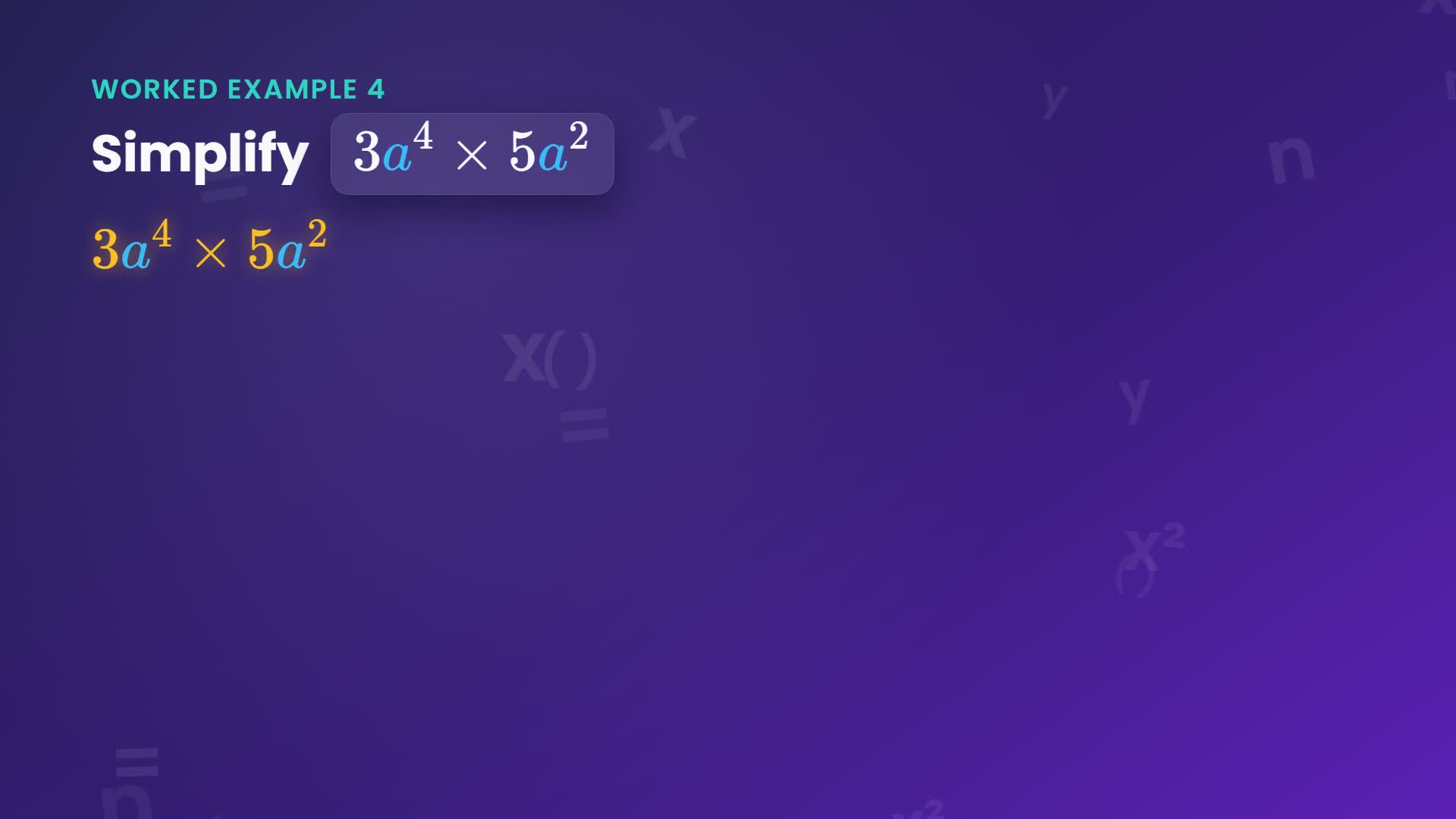
3a⁴ × 5a² = 15a⁶
20x⁷ ÷ 4x³ = 5x⁴
(2m³)⁴ = 2⁴ × m¹² = 16m¹²
(x⁴ × x⁵) ÷ x³ = x⁹ ÷ x³ = x⁶
Opening problem: 2³ × 2⁴ = 2⁷ = 128
Try it yourself: (a) 4y² × 6y⁵ = 24y⁷ (b) (3x²)³ = 27x⁶
Exam tips
Common mistake: x⁵ × x³ = x¹⁵ ✗ (multiplying the powers instead of adding). Also (2m³)⁴ = 2m¹² ✗: the 2 must be raised to the power 4 as well → 16m¹².
Remember: multiply → add powers; divide → subtract powers; bracket power → multiply powers; numbers first, then letters.
Resources
- No questions yet. Be the first to ask!
The full transcript is available with the lesson.